
As you might have noticed, I missed last week's Monday Magnoliophyte. Well, I was out of town, on my summer vacation if you will, in Monterey, CA with Rachael and her family. Truly beautiful area; if you ever have the time, definitely take a walk around Point Lobos, and of course visit the aquarium. The great white sharks (Carcharodon carcharias) that they had had for a while were no longer there, but they did have a nice Syngnathid exhibit (seahorses, pipefish, and weedy/leafy seadragons). We also spent some time in Santa Cruz before coming back to Moraga, with another little trip to Muir Woods. Perhaps I will do a post on Sequoias, even though they are conifers...they really are amazing plants.
At any rate, while in NorCal I was amazed at the variety and abundance of sage that we came across on our hikes. "Sage" can refer to the plants of three different genera in Lamiaceae, with the largest and most common being Salvia. The genus Salvia contains roughly 900 species of plant (including the hallucinogenic Salvia divinorum), with at least 40 of them being referred to as "sage". The most common variety is Salvia officinalis, or Common Sage, which is used in cooking (many other varieties are edible as well).
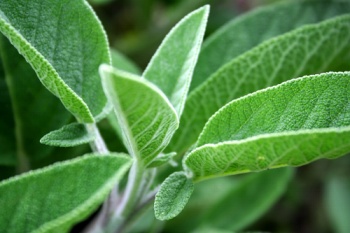
Eudicots; Lamiales; Lamiaceae; Salvia officinalis
Walking along the California coastline, it's nearly impossible not to come across some type of sage, and the aroma is instantly recognizable. One component of its rather complex array of aromatic chemicals is thujone, a mildly psychoactive compound that is thought to produce some of the psychadelic experience associated with drinking absinthe, which also contains thujone extracted from wormwood. As such, it is advised not to ingest great quantities of sage with CNS stimulants or depressants. In normal use, though, sage acts as an acetylcholinesterase inhibitor, enhancing memory and cognitive abilities. Sage has been used by people all over the world for centuries (its origins are South/Southwest Asia and Central America) for nearly every medical ailment, and is now known to be an anhidrotic, antibiotic, antifungal, astringent, antispasmodic, estrogenic, hypoglycemic, and tonic. Also, it tastes delicious in herby, rich recipes with beef, pork, or poultry. As such, I grow some on my balcony. Upon returning to my condo, I saw that plant had not been getting much water, and so sent up its characteristic purple flowers. While they are rather pretty, resembling the color of irises, I pruned them away: reproduction takes nutrients away from producing leaves, the real purpose of herbs.