
Pineapples are herbaceous perennial bromeliads that produce sweet "multiple fruits", in that what we perceive as a single fleshy fruit body is actually a compression of adjacent, helically arranged fruits. The plant can grow to 5 feet tall, and is primarily pollinated by hummingbirds. In Hawaii, due to the extent of the agricultural cultivation of the plant, hummingbird importation is forbidden. The name "pineapple" was actually first recorded in 1398 to describe what we now call "pine cones". The term was redefined in 1664 after European explorers had discovered the tropical fruit, native to southern Brazil and Paraguay. We largely owe the modern distribution of pineapple to the Spanish, who spread it outside of Latin America (Columbus found it in the Caribbean) to Hawaii, the Philippines, Guam, and Zimbabwe. Pineapples are one of the relatively few plants that carry out crassulacean acid metabolism (CAM photosynthesis), whereby carbon dioxide is stored at night as the four-carbon acid malate and then released near the enzyme RuBisCO during the day, improving the efficiency of photosynthesis.
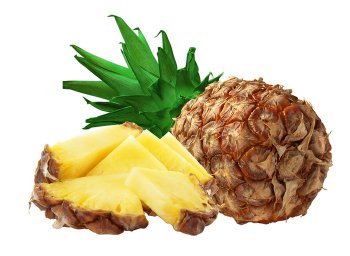
Monocots; Commelinids; Poales; Bromeliaceae; Ananas comosus
Pineapples contain large amounts of the protease bromelain, and as such raw pineapple should not be consumed by those suffering from various protein deficiencies, nor those with hemophilia, kidney, or liver diseases (or the occasional canker sore, as I'm well aware!). Other than that, the fruit is high in vitamin C and manganese, and helps with some intestinal disorders and may induce labor when a child is overdue. Due to the presence of the protease and the natural acidity of the fruit, pineapple makes a wonderful marinade for meats as a tenderizer, and is commonly used in pork dishes. It's sweetness, though, helps it get into many desserts, juices, smoothies, salads, etc. as well.