
Thyme is a low growing herbaceous plant that is cultivated for its distinctive aromatic flavoring. It grows on rather thin, wiry stems, with paired opposite leaves of oval shape, about 4-20 mm long. If left untended, the stems may intertwine quite a bit, making it difficult to remove a single stem without stripping the leaves (as I well know!)
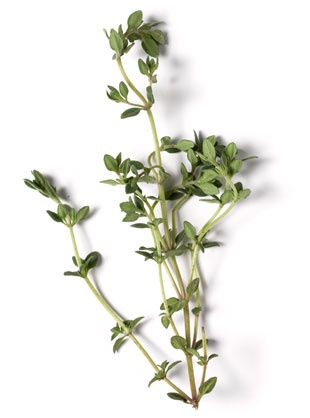
Magnoliopsida (dicots); Lamiales; Lamiaceae; Thymus vulgaris
A member of the mint family, Thymus vulgaris is the most common form, although many varieties (cultivars) exist. It derives its flavor from the presence of thymol, the phenol derivative shown below.
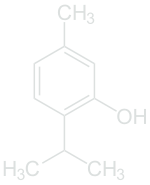
This chemical has powerful antiseptic properties, and acts as an expectorant, loosening phlegm from the lining of the throat and respiratory tract. Many other medicinal applications have been employed since the days of the ancient Egyptians, such as its antifungal and antibiotic effects (thymol is the main acting ingredient in Listerine mouthwash). The plant also has a rich symbolic tradition: in Medieval Europe, it symbolized courage, and it was common for Crusaders to receive scarves embroidered with thyme from their wives as they left for war.
The herb itself is used in many cuisines, particularly those from the Mediterranean, the plant's native habitat. It can be used to flavor soups and stews, and is commonly used in egg dishes. Its retention of flavor upon being dried makes it very useful as a seasoning agent.