
A grape is a true berry of the woody vines of genus Vitus. The vines are lianas: long stemmed perennial or deciduous woody vines that root in soil and use trees or other vertical support to reach the sunlit canopy, and as such are epiphytes (not parasitic). Most of today's cultivars were domesticated from the Common Grape Vine (Vitus vinifera), whose wild range extends across Europe, North Africa, and the Middle East. The wild variety (subspecies sylvestris) is dioecious, requiring pollination to fruit, but domesticated cultivars have hermaphrodite flowers. The genus has been dated to have evolved roughly 130 to 200 million years ago, and humans have interacted with it since the Neolithic Period began nearly 12,000 years ago.
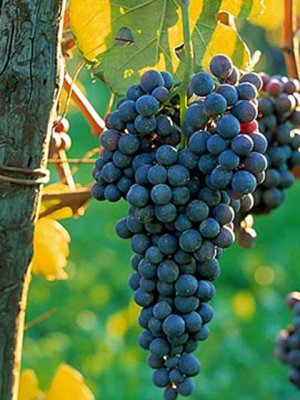
Eudicots; Vitales; Vitaceae; Vitus vinifera
The plant was likely domesticated around 3500 BCE in Southwest Asia, and spread quickly to Egypt and Phoenicia. Grapes and wine production are mentioned in the Epic of Gilgamesh and many Egyptian hieroglyphics of the third millennium BCE, and the Greeks introduced wine to Europe in the Minoan Age (Hesiod and Homer make extensive reference to wine, and classical pantheons of gods usually include one deity devoted to the beverage, Dionysus or Bacchus). The Etruscans developed a trade network for the fruit and wine that extended beyond the Mediterranean, and the Chinese began its cultivation in the Han Dynasty, around the second century CE. The vine was introduced to the Americas with the first European explorers. Today, most grapes are produced by Italy, France, China, and the USA, with 98% of grapes in America grown (not surprisingly) in California. Why do we have a budget crisis in this state when we grow essentially all of the food in the country?
Grapes have a wide variety of health benefits, though most of them come from the now-uncommon seeded varieties, due to the more complex mixture of phytochemicals produced in seed development. Polyphenol antioxidants found in grape skins (like resveratrol) have been linked to reduction in cardiovascular problems, to the point where a glass of red wine per day is recommended (two for men). These antioxidants in addition to anthocyanins and other phenolics found in grape skins also limit gene expression of heart and skeletal aging, and so help prevent certain age-related health problems. In addition to fermenting to form wine (whose alcohol content has additional health benefits if consumed moderately), grapes can be eaten raw, mashed into jams and jellies, squeezed into juice, and dried into raisins and Zante currants. Grape seed oil and extracts are also used in many cosmetic and cooking applications, and even the leaves can be used in cooking and medicinal application.